
11 min read
What Is 3PL? A Complete Guide to Third-Party Logistics
Running a growing business means managing more than just sales: it’s storage, shipping, and supply chain chaos. One delayed shipment or warehouse...
6 min read
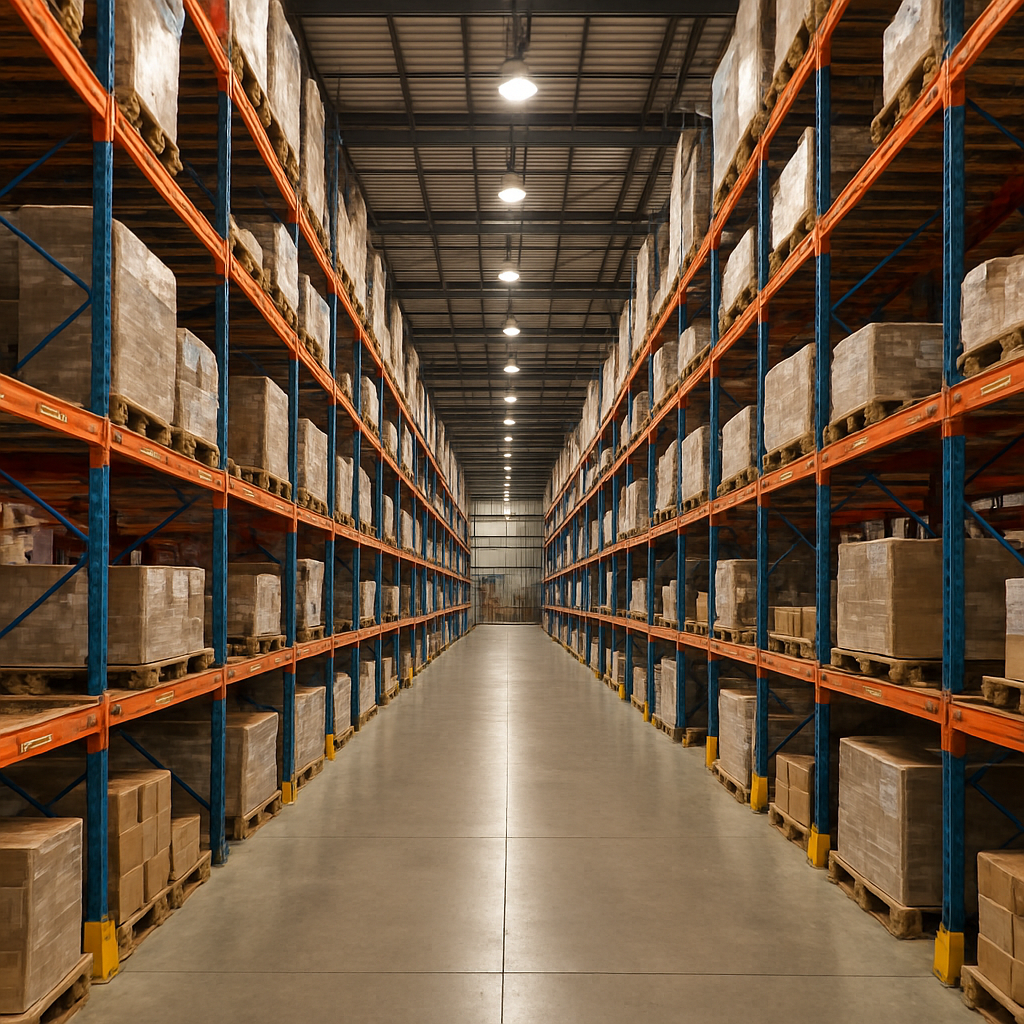
Managing warehousing, fulfillment, and shipping in-house drains resources that should be allocated to your core business.
Rising storage costs, complex logistics, and customer demands for faster delivery leave many companies stretched thin.
Partnering with a third-party logistics provider (3PL) can reduce logistics costs, improve delivery times, and free your team to focus on what matters most: growing your business.
Here are nine 3PL benefits that can transform your supply chain!
Third-party logistics (3PL) is the outsourcing of supply chain operations to an external provider. These providers handle receiving, storing, and shipping inventory on behalf of brands and retailers. Instead of building and managing your own warehouse infrastructure, a 3PL handles these functions so you can focus on product development, marketing, and sales.
3PL providers range from basic warehousing companies to complete logistics service providers that manage transportation, order fulfillment, inventory tracking, and returns processing.
Many integrate with e-commerce platforms and marketplaces, ensuring retailer compliance and providing real-time visibility into stock levels and order status. For companies experiencing growth or seasonal demand spikes, 3PLs offer the flexibility to scale without significant capital investments.
Outsourcing logistics delivers measurable advantages across cost, speed, and operational efficiency. These nine 3PL benefits explain why the industry continues to grow and why businesses of all sizes are switching.
Running your own warehousing operation means paying for rent, utilities, equipment, labor, and insurance, whether you ship 100 orders or 10,000. A 3PL spreads these fixed costs across multiple clients, allowing you to pay only for the space and services you use. According to the 2024 Third-Party Logistics Study from Penn State University, NTT DATA, and Penske Logistics, 80% of shippers report that 3PLs help reduce logistics costs.
3PLs also negotiate bulk shipping rates with carriers. Since they ship thousands of packages daily across multiple clients, they secure discounts that individual businesses cannot access. These savings compound over time, directly improving your profit margins.
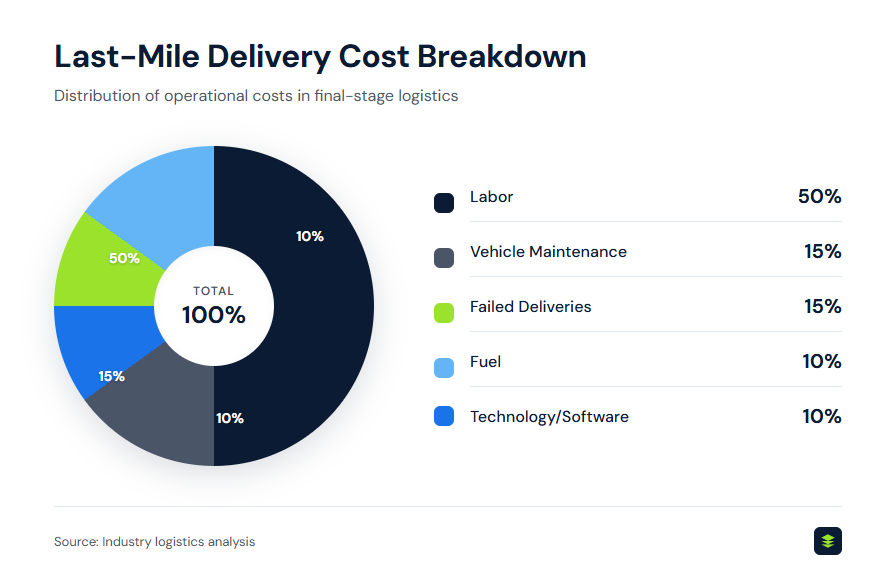
Shipping costs can make or break e-commerce profitability. Last-mile delivery alone accounts for 53% of total shipping costs, according to Statista. 3PLs address this by maintaining relationships with multiple carriers and knowing which ones offer the best rates for specific routes and package types.
Many 3PLs operate multiple warehouse locations, allowing you to store inventory closer to your customers through effective transportation management. This zone-skipping strategy reduces shipping distances and costs while speeding up delivery times; it’s a win for your budget and customer satisfaction.
Fulfillment and logistics may not be your specialty, and they do not have to be. 3PL providers live and breathe supply chain management. They understand carrier rate negotiations, optimal warehouse layouts, pick-and-pack efficiency, and compliance requirements across different regions.
The 2024 Third-Party Logistics Study found that 89% of shippers report that 3PLs improve their service levels. This expertise translates into fewer shipping errors, faster order processing, and better warehouse pick rates.
Growth should be exciting, not stressful. When sales spike during the holiday season or after a successful marketing campaign, a 3PL offering seasonal services can scale up warehouse space, labor, and shipping capacity.
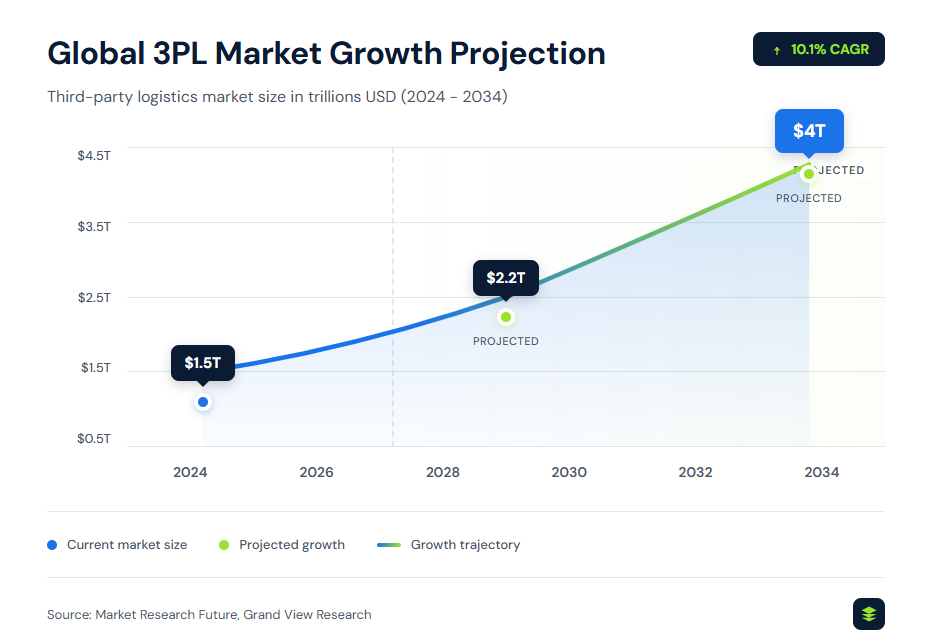
The global 3PL market reflects this demand for flexible logistics. Global Market Insights reports the market size reached $1.5 trillion in 2024 and is projected to grow at a 10.1% CAGR through 2034. This growth signals that more businesses recognize outsourced logistics as a competitive advantage rather than a cost center.
Inventory errors cost money. Stockouts mean lost sales. Overstocking ties up capital. Shrinkage and inventory waste eat into margins. Professional 3PLs use warehouse management systems (WMS) with barcode or RFID scanning to track every item from the receiving dock to the customer's doorstep.
Real-time inventory tracking lets you see exactly what you have, where it is stored, and when to reorder. This visibility reduces stockouts and write-offs while giving you the data needed for better demand planning and purchasing decisions.
Customer expectations for shipping speed continue to rise. Two-day delivery has become standard, and same-day options are increasingly common. Meeting these expectations with a single warehouse is nearly impossible if your customers are spread across the country.
3PLs with distributed fulfillment networks solve this problem. By storing inventory in multiple locations, orders ship from the facility closest to each customer. This reduces both transit times and shipping costs, making fast delivery economically viable.
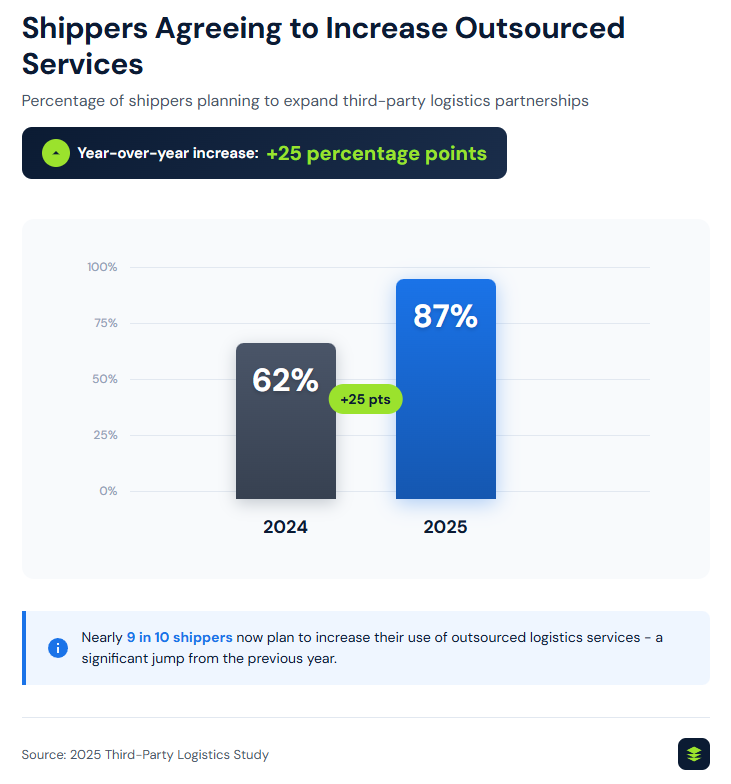
Time spent managing warehouse operations is time not spent on product development, marketing, or customer relationships. The 2025 Third-Party Logistics Study shows that 87% of shippers agreed to increase their outsourced logistics services: a 25 percentage point increase from the previous year (up from 62%). This shift reflects a strategic move to redirect resources toward activities that drive growth.
Outsourcing fulfillment removes the daily burden of hiring warehouse staff, maintaining equipment, managing carrier relationships, and handling returns. Your team gains bandwidth to pursue opportunities that directly impact revenue.
Modern fulfillment requires technology: warehouse management systems, order management platforms, carrier integrations, and analytics dashboards. Building this tech stack internally costs hundreds of thousands of dollars in software, implementation, and ongoing maintenance.
3PLs have already made these investments. According to the 2024 Third-Party Logistics Study, 87% of shippers and 94% of 3PLs agree that adopting emerging technologies is critical to future success. When you partner with a 3PL, you gain access to their technology platform, often integrated directly with your e-commerce store or ERP system.
Every aspect of fulfillment affects how customers perceive your brand. Fast shipping, accurate order processing, professional packaging, and easy reverse logistics all contribute to customer satisfaction. The 2024 Third-Party Logistics Study found that 89% of shippers report that their 3PL relationships are successful, with service improvements as a primary benefit.
A capable 3PL partner helps you compete with larger retailers on delivery speed and reliability without matching their logistics infrastructure investments. This levels the playing field and allows smaller brands to deliver experiences that build customer loyalty.
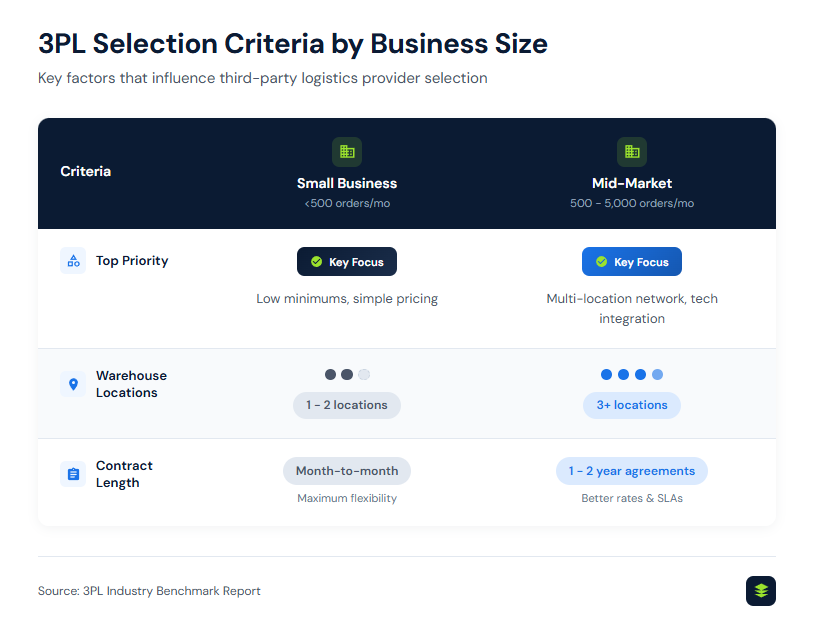
Not all 3PLs are created equal. The right partner depends on your product type, order volume, geographic reach, and growth plans.
Here are the key factors to evaluate before signing a contract:
 Frequently Asked Questions
Businesses typically benefit from a 3PL when they process 100-200 orders per month and logistics operations consume significant time and resources. Other indicators include rapid growth that strains current capacity, expansion into new geographic markets, seasonal demand spikes that require flexible warehousing, or a desire to offer faster shipping options without building infrastructure.
3PL pricing varies based on storage needs, order volume, and service complexity. Common fee structures include monthly storage fees (typically $20-40 per pallet), pick-and-pack fees ($2-5 per order plus per-item charges), and receiving fees ($25-50 per hour or per pallet). Most 3PLs require a minimum monthly commitment of $250 to $1,000 for smaller accounts.
A freight forwarder coordinates transportation between locations but does not store or handle inventory. A 3PL provides comprehensive logistics services including warehousing, inventory management, order fulfillment, and shipping. Freight forwarders typically move bulk shipments between manufacturers and warehouses, while 3PLs handle ongoing storage and individual customer order fulfillment.
Yes, many 3PLs now cater specifically to small businesses and startups with lower minimum requirements. Small businesses gain access to negotiated shipping rates, professional fulfillment operations, and warehouse space without significant capital investments. The cost per order often decreases relative to self-fulfillment once monthly volume reaches 100-300 orders.
Most 3PLs offer native integrations with major e-commerce platforms like Shopify, WooCommerce, BigCommerce, and Amazon. These integrations automatically sync orders, inventory levels, and tracking information between your sales channels and the 3PL's warehouse management system. Setup typically takes a few hours to a few days, depending on complexity.
Key contract elements include service-level agreements (SLAs) for order accuracy and shipping speed, clear pricing structures with no hidden fees, termination clauses and notice periods, liability coverage for lost or damaged inventory, and data ownership provisions. Request performance guarantees with remedies if the 3PL fails to meet agreed standards.
11 min read
Running a growing business means managing more than just sales: it’s storage, shipping, and supply chain chaos. One delayed shipment or warehouse...
7 min read
Outsourcing your logistics to a third-party provider should reduce headaches, not create them. Yet many businesses discover that their 3PL...

9 min read
Partnering with a 3PL (third-party logistics) sounds simple until you hit inventory transfers, integrations, and lost orders. Most businesses think...